
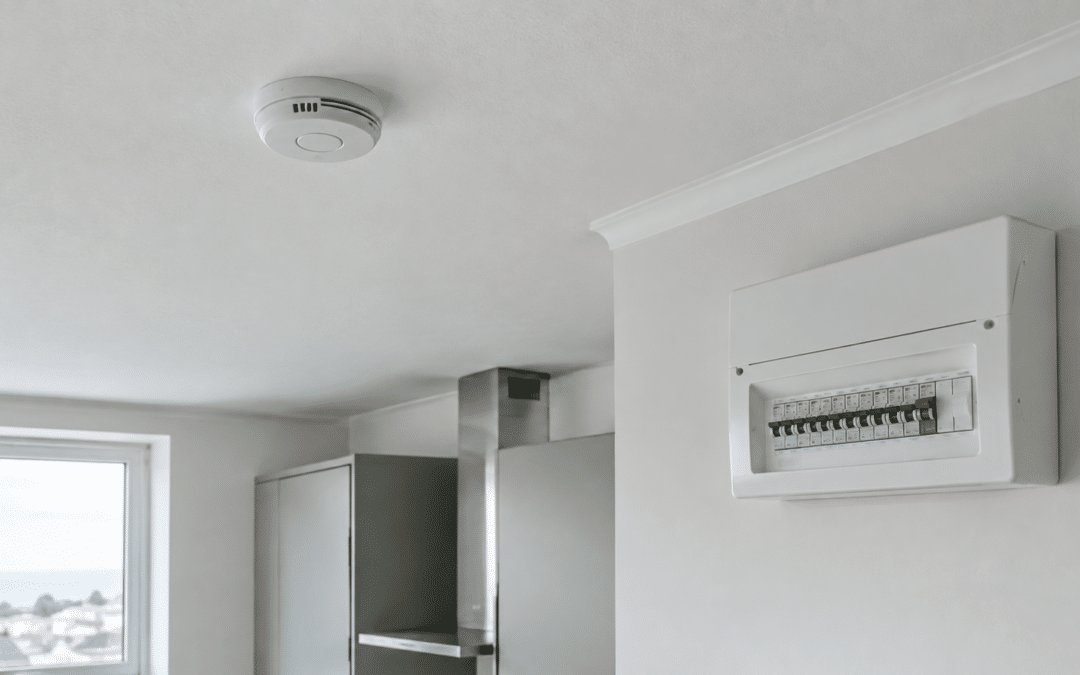
Letting a property legally in Brighton & Hove in 2026 means holding roughly a dozen certificates and requirements at once, several with their own renewal date. Miss one and you risk a civil penalty of up to £40,000, and possibly the ability to get your property back at all. This is the full list, in the order you’ll actually need it.
Since 1 May 2026, the maximum civil penalty for most housing offences — unlicensed letting, breaching HMO rules, failing to protect a deposit — rose from £30,000 to £40,000. Councils can issue this as an alternative to prosecution, and Brighton & Hove has been active on enforcement.
Before you market the property
Three certificates need to exist before a tenant moves in, and a fourth check needs doing if the property could be affected by licensing.
| Requirement | Renewal | Penalty for non-compliance |
|---|---|---|
| Energy Performance Certificate (EPC) | Every 10 years | Currently up to £5,000; a government proposal to raise this to £30,000 has not yet passed into law |
| Gas Safety Certificate (CP12), if the property has gas | Every 12 months | Unlimited fine or prosecution; blocks possession proceedings |
| Electrical Installation Condition Report (EICR) | Every 5 years | Up to £30,000 |
| Legionella risk assessment | Reviewed periodically, no fixed statutory interval | Enforcement under general health and safety law |
The EPC needs a minimum rating of E, and must be in place before you start marketing the property, not just before the tenancy begins. A government target of C by October 2030 has been announced but is not yet law, so it’s worth planning for rather than acting on immediately.
Before you go any further, check whether the property sits in one of Brighton & Hove’s licensing zones. This is easy to get wrong because ward boundaries don’t follow obvious street lines, and getting it wrong is expensive.
Licensing — the Brighton & Hove specifics
Brighton & Hove runs three separate licensing schemes, and a property can fall under more than one depending on how it’s let:
- Selective licensing covers ordinary single-household lets in designated wards, regardless of occupant numbers. It’s currently in force in Kemptown, Moulsecoomb & Bevendean, Queen’s Park, and Whitehawk & Marina, and extends to Central Hove and Regency from 20 October 2026. The scheme runs until September 2029 in the original four wards.
- Additional HMO licensing applies city-wide to houses in multiple occupation with three or four unrelated occupants sharing facilities.
- Mandatory HMO licensing is a national requirement, not a council scheme, and applies anywhere in England to properties with five or more occupants forming two or more households.
These schemes stack. A small shared house in Kemptown with four unrelated tenants could need both a selective licence and an additional HMO licence at the same time. The council’s online licensing checker is the reliable way to confirm what applies to a specific address — don’t assume from the postcode.
At the start of the tenancy
- Protect the deposit. Within 30 days of receiving it, place it in an approved scheme (DPS, MyDeposits, or TDS) and serve the tenant the scheme’s prescribed information. Miss this and you can’t use certain possession grounds, and a court can order you to pay the tenant one to three times the deposit.
- Give the tenant the current How to Rent guide. Use the version live on GOV.UK at the time, not a saved copy from a previous tenancy — it’s updated periodically and an outdated copy doesn’t count as having provided it.
- Complete a Right to Rent check. Verify and keep a copy of evidence of the tenant’s immigration status before they move in, for every adult occupant, not just the person named on the tenancy.
- Provide the written statement of terms. Since the Renters’ Rights Act, tenants are entitled to core written information about their periodic tenancy, either in the agreement itself or as a standalone document.
- Test every alarm on the day the tenancy starts. A working smoke alarm on every storey and a carbon monoxide alarm in any room with a fixed combustion appliance, both confirmed working at the start of the tenancy, not just installed at some point.
Throughout the tenancy
- Renew the gas safety certificate every 12 months and serve a copy on the tenant within 28 days of the check. Book it early — you can renew up to two months before expiry without losing any time on the certificate’s 12-month cycle.
- Respond to hazards on a strict timescale. Awaab’s Law, extended to private landlords under the Renters’ Rights Act, sets defined periods for investigating and fixing serious hazards like damp and mould once you’re notified.
- Only increase rent once every 12 months, using a Section 13 notice with at least two months’ notice, reflecting the open market rate.
- Keep records. Certificates, deposit protection confirmation, and correspondence about repairs are all worth keeping for at least the length of the tenancy plus a couple of years, in case a dispute or an inspection comes up later.
What’s coming, but isn’t law yet
Two further requirements have been announced under the Renters’ Rights Act but haven’t commenced, and it’s worth knowing the difference between “coming” and “in force now” so you don’t act on something prematurely, or get caught out when it does land:
Private Rented Sector Database: a national landlord register, expected to begin phased rollout from late 2026 with mandatory registration likely around 2027. Not a live duty yet, but worth preparing for by keeping the documents above current and in one place.
PRS Ombudsman: a mandatory landlord ombudsman scheme, expected around 2028. Also not live yet.
The full checklist at a glance
| Requirement | When |
|---|---|
| EPC (minimum E) | Before marketing, renew every 10 years |
| Gas Safety Certificate | Before letting, renew every 12 months |
| EICR | Before letting, renew every 5 years |
| Legionella risk assessment | Before letting, review periodically |
| Selective / HMO licence, if applicable | Before letting, per scheme term |
| Deposit protection + prescribed information | Within 30 days of receiving deposit |
| How to Rent guide | Before tenancy starts |
| Right to Rent checks | Before tenancy starts, all adult occupants |
| Written statement of terms | At tenancy start |
| Smoke & CO alarms, tested | At tenancy start, then ongoing |
This is a lot to hold at once, especially across more than one property. It’s the exact list we work through for every property we manage for Brighton & Hove landlords, with renewal dates tracked so nothing lapses without you noticing.
Not sure your property is fully compliant?
Tell us the address and we’ll check it against every certificate and licence above, and flag anything that needs sorting.
Get a compliance checkRequirements and penalties in this article are current as of September 2026, drawing on Brighton & Hove City Council’s selective and HMO licensing pages, and guidance summarised from multiple UK landlord compliance sources published in 2026. This is general information and not legal advice — please confirm your specific obligations with the council’s Private Sector Housing team or a qualified professional before relying on it.